DEL ESPLENDOR A LA SUPERVIVENCIA
PROPUESTA DE INTERVENCIÓN EN EL PABELLÓN EPITÁCIO PESSOA Y LA CASA CRISTIANO LAURITZEN
DOI:
https://doi.org/10.35572/arql.v4i14.7625Palabras clave:
patrimônio edificado, intervenção no patrimônio, arquitetura eclética, projeto de arquiteturaResumen
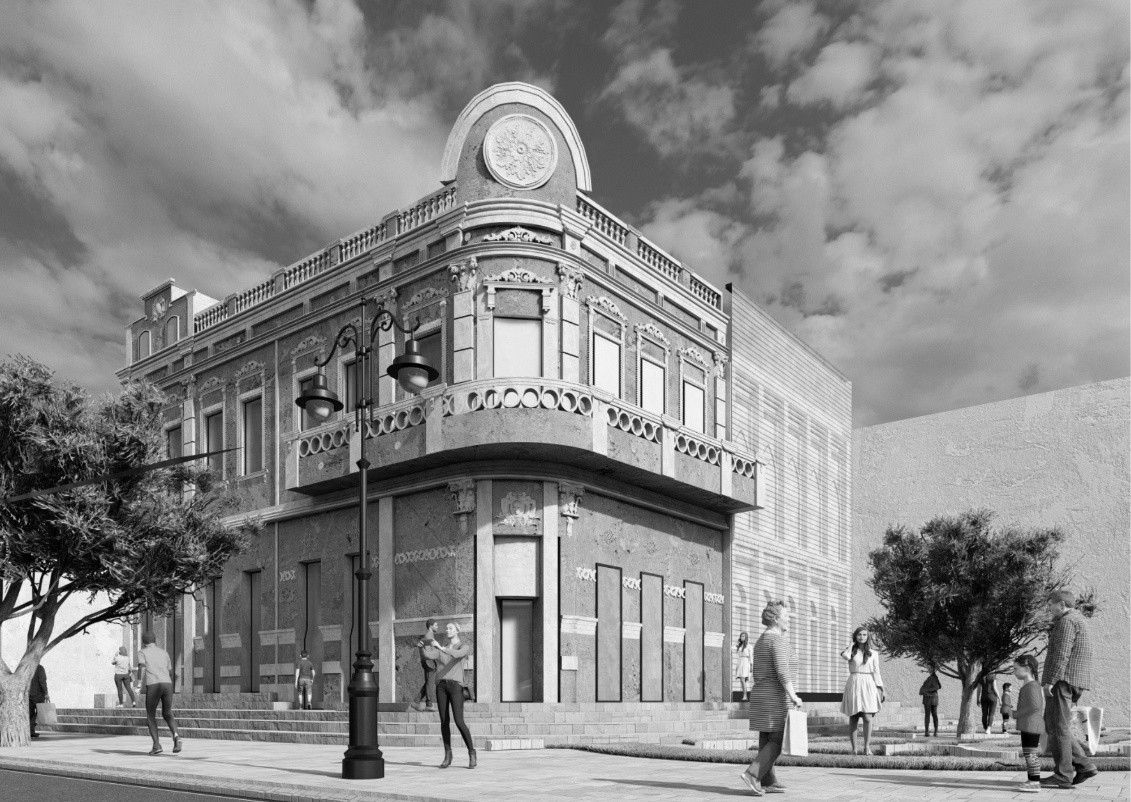
El presente trabajo presenta una propuesta de intervención patrimonial desarrollada para la asignatura de Proyecto de Arquitectura y Urbanismo V de la Universidad Federal de Campina Grande. El estudio tiene como objeto dos edificios eclécticos ubicados en el Centro Histórico de Campina Grande, Paraíba: el Pabellón Epitácio Pessoa y la Casa Cristiano Lauritzen. A pesar de su relevancia histórica, arquitectónica y urbana, ambos inmuebles se encuentran en un avanzado estado de deterioro físico y pérdida de sus características originales, lo que demanda acciones orientadas a su preservación y rehabilitación.
Como fundamento metodológico, se adoptó el método propuesto por Afonso (2019), que analiza los bienes patrimoniales a partir de siete dimensiones: normativa, histórica, espacial, funcional, formal, tectónica y de conservación. La investigación se estructuró en tres etapas principales. La primera consistió en la anamnesis, dedicada al levantamiento y comprensión de los edificios desde sus dimensiones arquitectónicas. Posteriormente, se realizó el diagnóstico, basado en la identificación de manifestaciones patológicas y en el mapeo de daños mediante Fichas de Identificación de Daños (FIDs), lo que permitió definir directrices de intervención compatibles con las necesidades de conservación de los inmuebles.
Finalmente, se desarrolló la propuesta proyectual, orientada por los principios contemporáneos de preservación del patrimonio, tales como la distinguibilidad, la reversibilidad, la compatibilidad de materiales y la mínima intervención. La propuesta contempla la incorporación de nuevos usos capaces de reactivar los edificios, destinando el Pabellón Epitácio Pessoa a un gastrobar y la Casa Cristiano Lauritzen a un espacio de coworking. Complementariamente, se propone la recalificación del espacio urbano mediante la creación de una plaza pública integrada al conjunto arquitectónico. Los resultados demuestran el potencial de la intervención como estrategia para la preservación y resignificación del patrimonio construido, conciliando la salvaguarda de los valores históricos con las demandas contemporáneas de la ciudad.
Descargas
Citas
AFONSO, Alcília. Notas sobre métodos para a pesquisa arquitetônica patrimonial. Revista Projetar: Projeto e Percepção do Ambiente, [S. l.], v. 4, n. 3, p. 54-70, 2019. DOI: 10.21680/2448-296X.2019v4n3ID18778. Disponível em: https://periodicos.ufrn.br/revprojetar/article/view/18778. Acesso em: 11 fev. 2025.
BLOG RETALHOS HISTÓRICOS DE CAMPINA GRANDE. Um pouco mais do Pavilhão Epitácio Pessoa. 2010. Disponível em: https://cgretalhos.blogspot.com/2010/02/um-pouco-mais-do-pavilhao-epitacio.html. Acesso em: 23 fev. 2025.
COSTA, Lucas Amorim. Proposta para hostel no Centro Histórico de Campina Grande – PB: requalificação dos edifícios do Pavilhão Epitácio e do Sobrado Cristiano Lauritzen. 2024. 146 f. Trabalho de Conclusão de Curso (Bacharelado em Arquitetura e Urbanismo) – Universidade Federal de Campina Grande, Campina Grande, 2024.
ICOMOS; ISCARSAH (International Scientific Committee for the Analysis and Restoration of Structures of Architectural Heritage). Recommendations for the analysis, conservation and structural restoration of architectural heritage. Paris: ICOMOS, 2011.
LICHTENSTEIN, Norberto. Patologia das construções. São Paulo: Escola Politécnica da Universidade de São Paulo, 1986. (Boletim Técnico, n. 6).
TINOCO, Jorge Eduardo Lucena. Mapa de danos: recomendações básicas. Recife: Centro de Estudos Avançados da Conservação Integrada (CECI), 2009.
VILLARIM, Lizia Agra. Anteprojeto de intervenção no Pavilhão Epitácio Pessoa: livraria Correio de Campina. 2009. 50 f. Trabalho de Conclusão de Curso (Graduação em Arquitetura e Urbanismo) – Centro Universitário Unifacisa, Campina Grande, 2009.
Descargas
Publicado
Cómo citar
Número
Sección
Licencia
Derechos de autor 2026 Antônio Lucas Souza, Karina Morais, Alcilia Afonso

Esta obra está bajo una licencia internacional Creative Commons Atribución-NoComercial-SinDerivadas 4.0.
Los autores que publican en esta revista aceptan los siguientes términos:
1. Los autores mantienen los derechos de autor y otorgan a la revista el derecho de primera publicación, estando la obra licenciada simultáneamente bajo la Licencia Creative Commons Atribución-No Comercial-SinDerivadas 4.0, que permite compartir la obra con reconocimiento de autoría y publicación inicial en esta revista;
2. Los autores están autorizados a celebrar contratos adicionales por separado, para la distribución no exclusiva de la versión del trabajo publicado en esta revista (por ejemplo, publicación en un repositorio institucional o como capítulo de libro), con reconocimiento de autoría y publicación inicial en esta revista;
3. Se permite y se anima a los autores a publicar y distribuir su trabajo en línea (por ejemplo, en repositorios institucionales o en su página personal) una vez finalizado el proceso editorial, ya que esto puede generar cambios productivos, así como aumentar el impacto y la citación del trabajo. trabajo publicado (ver El efecto del acceso abierto);
4. No se recomienda publicar y distribuir el artículo antes de su publicación, ya que esto puede interferir con su revisión ciega por pares.