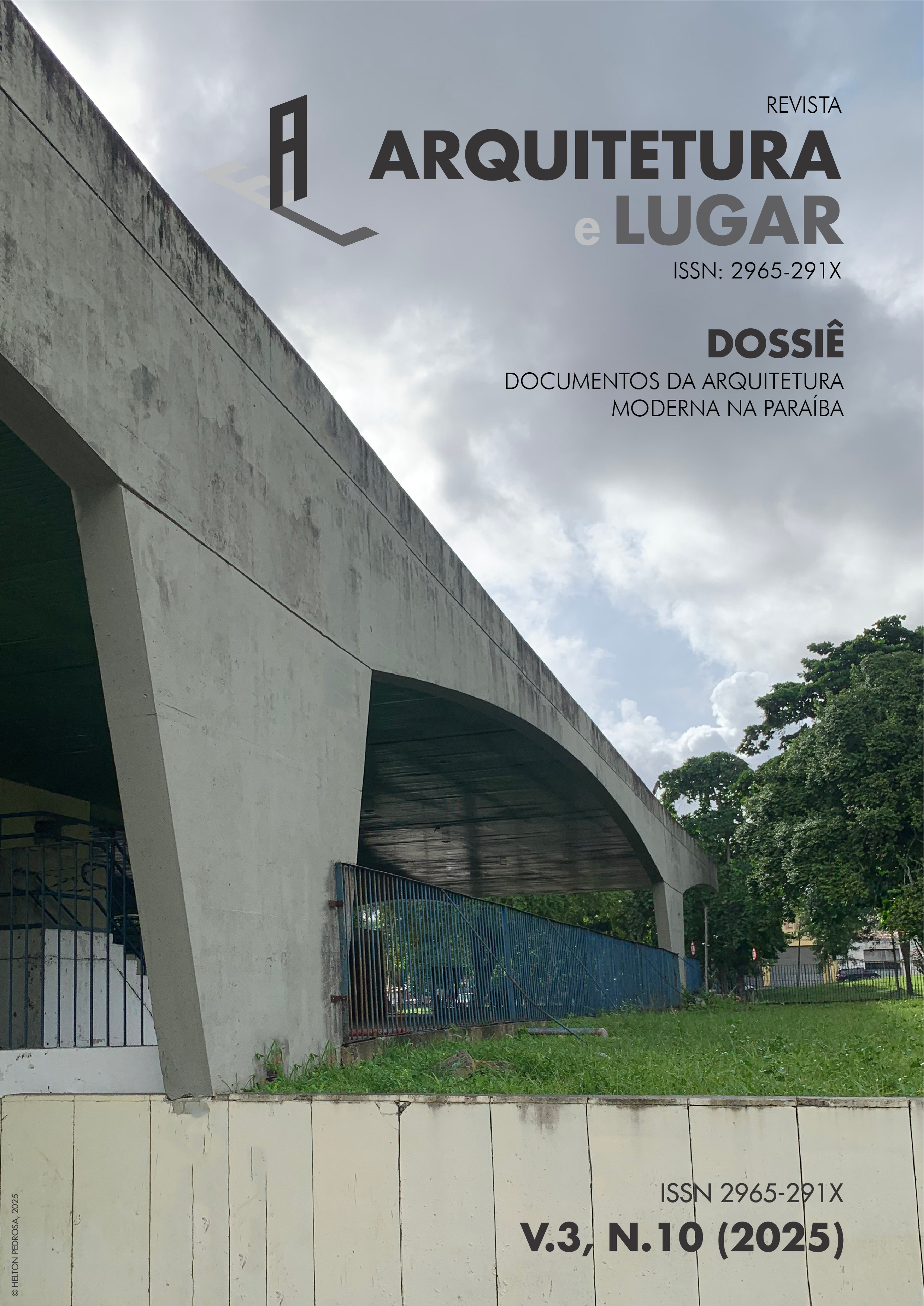
GLAUCO CAMPELLO AND THE BUS STATION PROJECTS IN PARAÍBA
DOI:
https://doi.org/10.35572/arql.v3i10.6647Keywords:
modernidade paraibana, rodoviarias, tectonicaAbstract
Glauco Campello nasceu na cidade de Mamanguape (PB), em 24 de julho de 1934. Em 1951, iniciou seus estudos universitários na Escola de Belas Artes de Pernambuco/ EBAP, mas foi para o Rio de Janeiro, em 1954, para estagiar no escritório de Oscar Niemeyer, iniciando a partir de então uma sólida amizade com o mestre carioca. Conseguiu concluir sua graduação em arquitetura pela Faculdade Nacional de Arquitetura, atual Universidade Federal do Rio de Janeiro (UFRJ), no ano de 1959.[1]
[1] As informações presentes nesse texto estão presentes no capítulo 19 sobre Glauco Campelo: Estação Rodoviária Argemiro de Figueiredo.1979/1985 do livro Campina Grande Moderna (Afonso, 2022).
Downloads
References
ENTREVISTADO: GLAUCO CAMPELLO
ROTEIRO, TEXTO, EDIÇÃO E REVISÃO DA ENTREVISTA: ALCILIA AFONSO
ENTREVISTADORAS: ISABEL DE HOLANDA E VALÉRIA CAMPELLO
DATA: JUNHO DE 2025
Downloads
Published
How to Cite
Issue
Section
License
Copyright (c) 2025 Alcília Afonso

This work is licensed under a Creative Commons Attribution-NonCommercial-NoDerivatives 4.0 International License.
Authors who publish in this journal agree to the following terms:
1. Authors retain the copyright and grant the journal the right of first publication, with the article simultaneously licensed under the Creative Commons Attribution License BY NC ND, which allows the sharing of article with acknowledgment of authorship and initial publication in this journal;
2. Authors are authorized to take additional contracts separately, for non-exclusive distribution of version of the article published in this journal (e.g. publish in institutional repository or as a book chapter), with acknowledgment of authorship and initial publication in this journal;
3. Authors are allowed and encouraged to publish and distribute their research work online (e.g. in institutional repositories or on their personal page) once the editorial process has been completed, as this can generate productive changes, as well as increase the impact and the citation of published article (See The Effect of Open Access);
4. It is not recommended to publish and distribute the article before its publication, as this may interfere with its blind peer review.