SEVERINO CAMELO BUS TERMINAL:
VIEWS OF A TECTONIC ARCHITECTURE.
DOI:
https://doi.org/10.35572/arql.v3i10.6598Keywords:
tectonics, modern architecture, Glauco CampelloAbstract
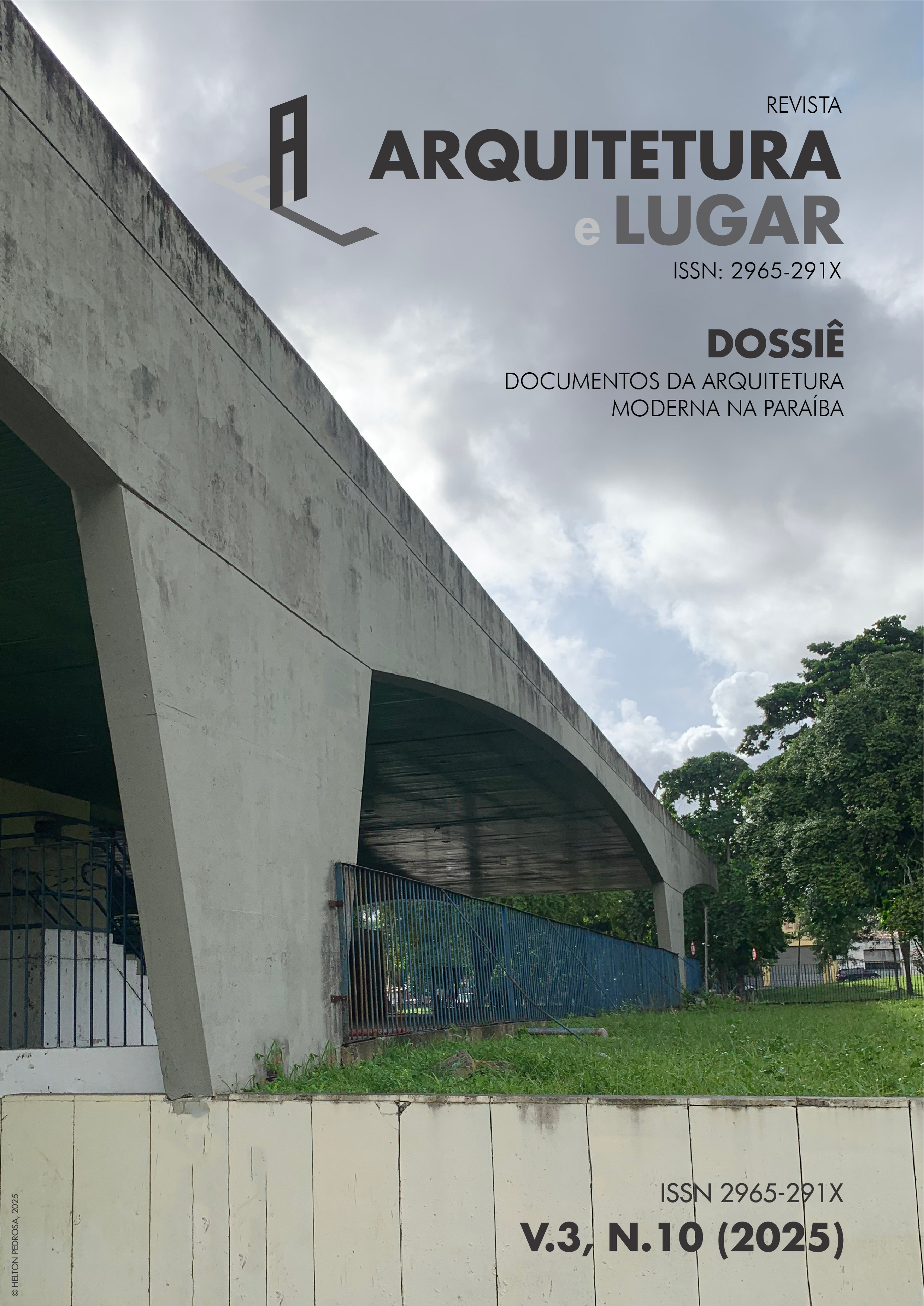
This photographic essay offers a visual reading of modern architecture through the record of the Severino Camelo Bus Terminal, located in João Pessoa, Brazil. Designed by Glauco Campello, in collaboration with José Luiz França de Pinho, in the 1970s and inaugurated in 1982, the terminal stands out for its formal, structural, and topographic adaptation solutions. The selected images highlight the tectonic aspects and compositional rationality of the project, structured from a regular modulation of reinforced concrete porticoes that organize circulation and define open spaces. The absence of vertical enclosures, wide eaves, and lightweight roofing indicate an architectural approach adapted to the building's climate and urban context. The essay emphasizes the integration between form and structure, exploring the brutalist language and spatial performance of the building. Despite minor modifications over time, the structure retains key features of its original design, reinforcing its importance as an object of study and documentation. In this context, photography functions as a critical documentation tool, contributing to the preservation of memory and the appreciation of modern architecture in Paraíba and the Brazilian Northeast.
Downloads
References
Documentos da arquitetura moderna na Paraíba. Org. Alcília Afonso, Ivanilson Pereira, Thiago Thamay. 2025. ISBN 978-65-01-48291-0.
Downloads
Published
How to Cite
Issue
Section
License
Copyright (c) 2025 Helton Pedrosa

This work is licensed under a Creative Commons Attribution-NonCommercial-NoDerivatives 4.0 International License.
Authors who publish in this journal agree to the following terms:
1. Authors retain the copyright and grant the journal the right of first publication, with the article simultaneously licensed under the Creative Commons Attribution License BY NC ND, which allows the sharing of article with acknowledgment of authorship and initial publication in this journal;
2. Authors are authorized to take additional contracts separately, for non-exclusive distribution of version of the article published in this journal (e.g. publish in institutional repository or as a book chapter), with acknowledgment of authorship and initial publication in this journal;
3. Authors are allowed and encouraged to publish and distribute their research work online (e.g. in institutional repositories or on their personal page) once the editorial process has been completed, as this can generate productive changes, as well as increase the impact and the citation of published article (See The Effect of Open Access);
4. It is not recommended to publish and distribute the article before its publication, as this may interfere with its blind peer review.