HABITAR, PERTENCER E PARTICIPAR
A CIDADE NO CONTEXTO DA INFÂNCIA
DOI:
https://doi.org/10.35572/arql.v4i13.7343Palavras-chave:
espaço urbano, infância, cidadania infantilResumo
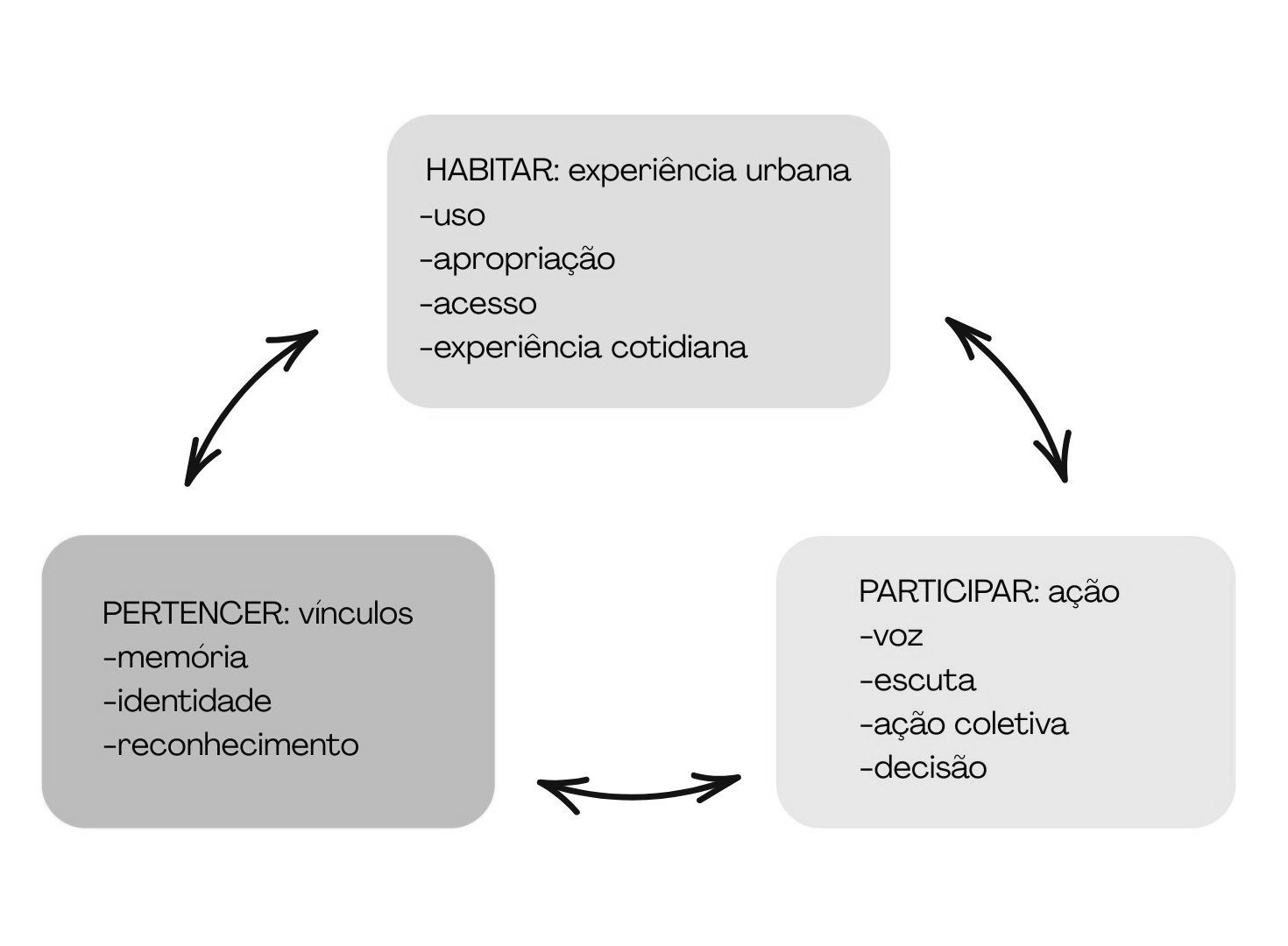
O artigo analisa a criança como sujeito urbano por meio das dimensões de habitar, pertencer e participar, centrais para a formação cidadã. O espaço urbano é entendido como território educativo, social e político, no qual circulação, brincadeiras e interações cotidianas configuram modos de vivenciar a cidade. O objetivo é compreender como essas dimensões articulam-se na construção da cidadania infantil. A pesquisa adota abordagem qualitativa exploratória, baseada em revisão bibliográfica e análise de marcos normativos. Os resultados indicam que habitar implica apropriação do espaço; pertencer envolve vínculos afetivos; participar refere-se à atuação e escuta. Conclui-se que a realidade urbana atual limita a mobilidade, as brincadeiras e a apropriação infantil, comprometendo a autonomia, o pertencimento e a cidadania, demandando cidades inclusivas, seguras e participativas.
Downloads
Referências
AICE - ASSOCIAÇÃO INTERNACIONAL DE CIDADES EDUCADORAS. Carta das Cidades Educadoras. Barcelona, 2020. Disponível em: https://www.edcities.org/wp-content/uploads/2020/11/PT_Carta.pdf. Acesso em: 28 maio 2025.
ASSUMPÇÃO, Ana Laura; CASTRAL, Paulo César. Memória, identidade e cultura: condições de pertencimento aos espaços da cidade. Revista Memória em Rede, Pelotas, v. 14, n. 27, p. 1-15, jul./dez. 2022. Disponível em: https://periodicos.ufpel.edu.br/ojs2/index.php/Memoria. Acesso em: 31 out. 2024.
BRASIL. [Constituição (1988)]. Constituição da República Federativa do Brasil. Brasília, DF: Senado Federal, 2016. 496 p. Disponível em: https://www2.senado.leg.br/bdsf/bitstream/handle/id/518231/CF88_Livro_EC91_2016.pdf. Acesso em: 31 out. 2024.
BRASIL. [Lei nº 10.257, de 10 de julho de 2001]. Estatuto da Cidade. Disponível em: https://www.planalto.gov.br/ccivil_03/leis/leis_2001/l10257.htm. Acesso em: 31 out. 2024.
BRASIL. [Lei nº 8.069, de 13 de julho de 1990]. Estatuto da Criança e do Adolescente. Brasília, DF: Diário Oficial da União, 1990.
FERREIRA, Milene Morais; SIMÕES, Patrícia Maria Uchôa. Mobilidade e autonomia na vivência de crianças urbanas: uma etnografia do parque público infantil. DESidades – Revista Científica da Infância, Adolescência e Juventude, v. 30, 2021. Disponível em: https://revistas.ufrj.br/index.php/desidades/article/view/46012. Acesso em: 4 fev. 2026.
FREIRE, Paulo. Pedagogia da autonomia: saberes necessários à prática educativa. São Paulo: Paz e Terra, 1996.
GEHL, Jan. Cidades para pessoas. 2. ed. São Paulo: Perspectiva, 2013.
GOMIDE, Letícia Mastrela. Educação urbana: uma introdução do direito à cidade no ensino fundamental. Trabalho de Conclusão de Curso (Graduação) – Universidade de Goiás, jul. 2021.
GUMA, J. L.; CALIL, M. A. S.; HOFFMEISTER, M. N. Infância e cidade: percepções sobre o espaço urbano. Disciplinarum Scientia | Ciências Humanas, v. 22, n. 2, p. 31–44, 2021. DOI: 10.37780/ch.v22i2.3905.
HART, Roger A. Children’s participation: from tokenism to citizenship. Florence: UNICEF International Child Development Centre, 1992.
HARVEY, David. O direito à cidade. Lutas Sociais, São Paulo, n. 29, p. 73-89, 2012. Disponível em: https://revistas.pucsp.br/index.php/ls/article/view/18497. Acesso em: 15 maio 2023.
HOLLOWAY, Sarah L.; VALENTINE, Gill. Children’s geographies: playing, living, learning. London: Routledge, 2000.
LYNCH, Kevin. The image of the city. Cambridge, MA: MIT Press, 1960.
ONU - ORGANIZAÇÃO DAS NAÇÕES UNIDAS. Convenção sobre os Direitos da Criança. Nova Iorque, 20 nov. 1989. Disponível em: https://www.unicef.org/brazil/convencao-sobre-os-direitos-da-crianca. Acesso em: 5 fev. 2026.
PÉREZ, Beatriz Corsino et al. Cidadania e participação social: um estudo com crianças no Rio de Janeiro. Psicologia & Sociedade, v. 20, n. 2, p. 271–280, ago. 2008. DOI: 10.1590/S0102-71822008000200005. Disponível em: https://www.scielo.br/j/psoc/a/CfYnbSpY9XrwSp78t7NSyPq/?lang=pt. Acesso em: 28 maio 2025.
PESAVENTO, Sandra Jatahy. Cidade, espaço e tempo: reflexões sobre a memória e o patrimônio urbano. Revista do Instituto Histórico e Geográfico do Rio Grande do Sul, n. 158, p. 207-216, dez. 2020. Disponível em: https://seer.ufrgs.br/index.php/revistaihgrgs/article/view/109697. Acesso em: 28 maio 2025.
PESAVENTO, Sandra Jatahy. Cidades visíveis, cidades sensíveis, cidades imaginárias. Revista Brasileira de História, São Paulo, v. 27, n. 53, p. 11-23, jun. 2007.
SABBAG, Gabriela Mello; KUHNEN, Ariane; VIEIRA, Mauro Luís. A mobilidade independente da criança em centros urbanos. Interações: Campo Grande, v. 16, n. 2, p. 433–440, jul./dez. 2015.
SANTOS, A. C. P. M. dos; CAVALETTI, D. A. As crianças e a cidade: observando o entorno da escola e propondo mudanças. Diversidade e Educação, v. 3, n. 6, p. 53–56, 2017. Disponível em: https://periodicos.furg.br/divedu/article/view/6380. Acesso em: 31 maio 2023.
TONUCCI, Francesco. A cidade das crianças. São Paulo: Cortez, 2005.
TORINO, Isabel Halfen da Costa. A memória social e a construção da identidade cultural: diálogos na contemporaneidade. Contribuciones a las Ciencias Sociales, dez. 2013. Disponível em: https://www.eumed.net/rev/cccss/26/memoria-social.html. Acesso em: 31 out. 2024.
UNICEF. Shaping urbanization for children: a handbook on child-responsive urban planning. New York: United Nations Children’s Fund, 2018.
WARD, Colin. The child in the city. London: Architectural Press, 1978.
Downloads
Publicado
Como Citar
Edição
Seção
Licença
Copyright (c) 2026 Laís Rocha Maciel, Aline Couto da Costa

Este trabalho está licenciado sob uma licença Creative Commons Attribution-NonCommercial-NoDerivatives 4.0 International License.
Autores que publicam nesta revista concordam com os seguintes termos:
1. Autores mantém os direitos autorais e concedem à revista o direito de primeira publicação, com o trabalho simultaneamente licenciado sob a Licença Creative Commons Attribution-NonCommercial-NoDerivatives 4.0 que permite o compartilhamento do trabalho com reconhecimento da autoria e publicação inicial nesta revista;
2. Autores têm autorização para assumir contratos adicionais separadamente, para distribuição não-exclusiva da versão do trabalho publicada nesta revista (ex.: publicar em repositório institucional ou como capítulo de livro), com reconhecimento de autoria e publicação inicial nesta revista;
3. Autores têm permissão e são estimulados a publicar e distribuir seu trabalho online (ex.: em repositórios institucionais ou na sua página pessoal) desde que concluído o processo editorial, já que isso pode gerar alterações produtivas, bem como aumentar o impacto e a citação do trabalho publicado (Veja O Efeito do Acesso Livre);
4. Não recomenda-se publicação e distribuição do artigo antes de sua publicação, pois isso poderá interferir na sua avaliação cega pelos pares.