IMMERSIVE ARCHITECTURE
EXPERIENCING SCALE IN BRASÍLIA
DOI:
https://doi.org/10.35572/arql.v3i9.6409Keywords:
modern architecture, Brasília, monumentalityAbstract
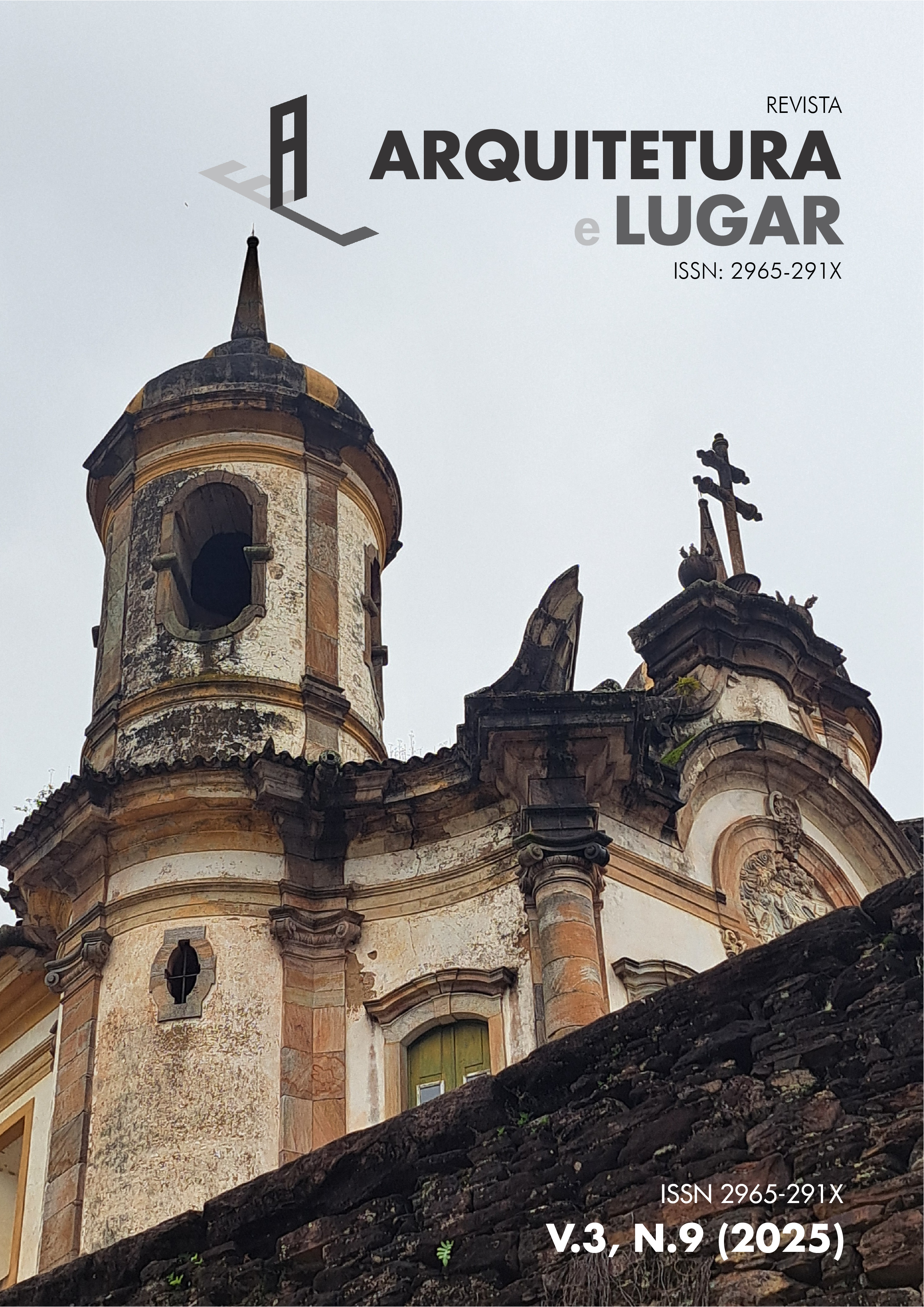
It is through shapes, light and shadow, contrasts, and textures that the architect evokes sensations in those who experience spaces with attention and sensitivity, transforming the experience into a true art in time. Based on this premise, the photographic essay conducted in Brasília by two Architecture and Urbanism students from UFCG in 2023 and 2024 was born. The photographs seek to capture a sensitive perspective on Brasília’s modern architecture, revealing new angles and viewpoints that only become perceptible through direct experience in the city—something that goes beyond the reach of books and images available on the internet. For the architect, touching, feeling, closely observing, and exploring each detail is more valuable than any theoretical abstraction about works that, although deeply studied, only fully reveal themselves through in-person experience.
Downloads
References
_
Downloads
Published
How to Cite
Issue
Section
License
Copyright (c) 2025 Ana Lydia Santos, Quezia Franklin Sousa

This work is licensed under a Creative Commons Attribution-NonCommercial-NoDerivatives 4.0 International License.
Authors who publish in this journal agree to the following terms:
1. Authors retain the copyright and grant the journal the right of first publication, with the article simultaneously licensed under the Creative Commons Attribution License BY NC ND, which allows the sharing of article with acknowledgment of authorship and initial publication in this journal;
2. Authors are authorized to take additional contracts separately, for non-exclusive distribution of version of the article published in this journal (e.g. publish in institutional repository or as a book chapter), with acknowledgment of authorship and initial publication in this journal;
3. Authors are allowed and encouraged to publish and distribute their research work online (e.g. in institutional repositories or on their personal page) once the editorial process has been completed, as this can generate productive changes, as well as increase the impact and the citation of published article (See The Effect of Open Access);
4. It is not recommended to publish and distribute the article before its publication, as this may interfere with its blind peer review.