FIELD NOTEBOOK - LINES OF MEMORY, DRAWINGS OF THE TERRITORY
A LOOK AT OURO PRETO AND TIRADENTES
DOI:
https://doi.org/10.35572/arql.v4i14.7598Keywords:
Museumization, Heritage, Ouro Preto, TiradentesAbstract
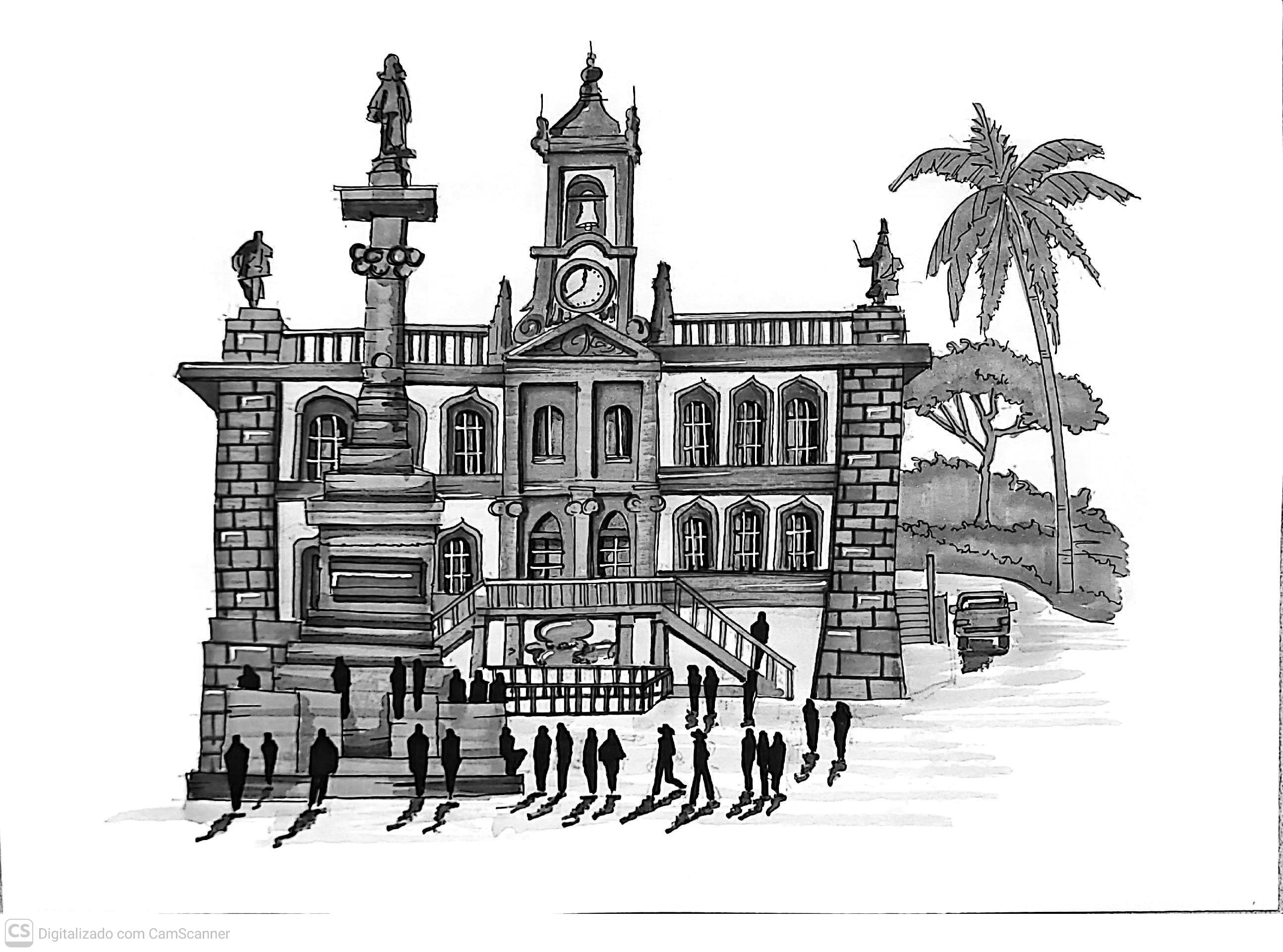
Field Notebook: Lines of Memory, Drawings of the Territory — a look at Ouro Preto and Tiradentes brings together sketches produced during fieldwork as an instrument for investigating, understanding, and analyzing the spatial and symbolic dynamics present in the historical cities studied. Inserted into the methodological path of the research, the drawings emerge as a way of observing the territory beyond photographic or documentary records, allowing us to understand the relationships between the use of public space, urban environments, daily practices, and the narratives constructed about the city.
Made from direct observation in the field, the sketches seek to record perceptions about the configuration of spaces, flows, permanences, appropriations, and tensions that permeate urban daily life, contributing to a sensitive and analytical reading of the territory. More than visually representing places, these drawings function as an interpretive tool, assisting in the identification of elements linked to memory, heritage, musealization processes, and the disputes that shape the urban experience in Ouro Preto and Tiradentes. In this sense, the notebook serves as a tool for reflection on lived territory, bringing together drawings that function as field records, analytical studies, and devices for interpreting the city, articulating drawing, research, and critical thinking as part of the construction of knowledge.
Downloads
References
Referências da pesquisa em andamento:
ALVES, M. R. Transformações Culturais e Contradições Urbanas do Espaço Público Contemporâneo. Revista Cidades, v. 11, p. 470-497, 2014.
BONUTI, L. A. Meu Jardim virou Praça: Olhares locais sobre Tiradentes/MG. Dissertação Mestrado Instituto do Patrimônio Histórico e Artístico Nacional. Rio de Janeiro, 2017.
BRAGA, P. M. Intervenções Urbanas em Áreas Centrais Históricas: Paisagens Particulares versus a Banalização da Paisagem. Tese doutorado. Universidade de São Paulo, USP, Brasil, 2013
CASTRIOTA, Leonardo Barci. Patrimônio cultural: conceitos, políticas, instrumentos. São Paulo: Annablume, 2009.
CHOAY, Françoise. A alegoria do patrimônio. 4º Edição. São Paulo: Estação Liberdade: Unesp. 2006.
GUIMARÃES, C. F. Atmosferas patrimoniais. Espaços públicos patrimonializados em Minas Gerais. Tese de doutorado. Universidade de São Paulo, USP, Brasil, 2023.
GUIMARÃES, C. F.; ALVES, M. R. Cursos d’água e a construção do território patrimonial: o caso de Ouro Preto. In: Carlos Smaniotto Costa, Marluci Menezes, Montserrat Pallares-Barbera, Gabriela Pastor, Eliana do Pilar Rocha, Klinge O. Villalba Condori. (Org.). Rios Urbanos na Ibero-América: Casos, Contextos e Experiências. 1ed.Lisboa: Edições Universitárias Lusófona, 2023, v. 06, p. 311-.
GUIMARÃES, C. F.; ALVES, M. R. Ouro Preto, materialidades e espacialidades de sua paisagem. Cadernos do Arquivo Municipal, v. 17, p. 109-128, 2022.
HUYSSEN, A. Culturas do passado-presente: modernismos, artes visuais, politícas da memória. Rio de Janeiro: Contraponto: Museu de Arte do Rio, 2014.
HUYSSEN, A. Escapando da amnésia. O museu como cultura de massas. Revista do patrimônio histórico e artístico Nacional. Rio de Janeiro, 1994, nº 23, p. 34-57.
HUYSSEN, A. Seduzidos pela memória: arquitetura, monumentos, mídia. 2º ed. Rio de Janeiro: Aeroplano, 2000.
Downloads
Published
How to Cite
Issue
Section
License
Copyright (c) 2026 Sophia Mariá Durão Juliani

This work is licensed under a Creative Commons Attribution-NonCommercial-NoDerivatives 4.0 International License.
Authors who publish in this journal agree to the following terms:
1. Authors retain the copyright and grant the journal the right of first publication, with the article simultaneously licensed under the Creative Commons Attribution License BY NC ND, which allows the sharing of article with acknowledgment of authorship and initial publication in this journal;
2. Authors are authorized to take additional contracts separately, for non-exclusive distribution of version of the article published in this journal (e.g. publish in institutional repository or as a book chapter), with acknowledgment of authorship and initial publication in this journal;
3. Authors are allowed and encouraged to publish and distribute their research work online (e.g. in institutional repositories or on their personal page) once the editorial process has been completed, as this can generate productive changes, as well as increase the impact and the citation of published article (See The Effect of Open Access);
4. It is not recommended to publish and distribute the article before its publication, as this may interfere with its blind peer review.